Wood burner guide
A clean burn is a hot burn
Most of the tar I sweep out of flues comes from stoves run too cold. Here is how to run yours at the right temperature for a cleaner, safer and cheaper fire. — Jeremy, HETAS registered sweep
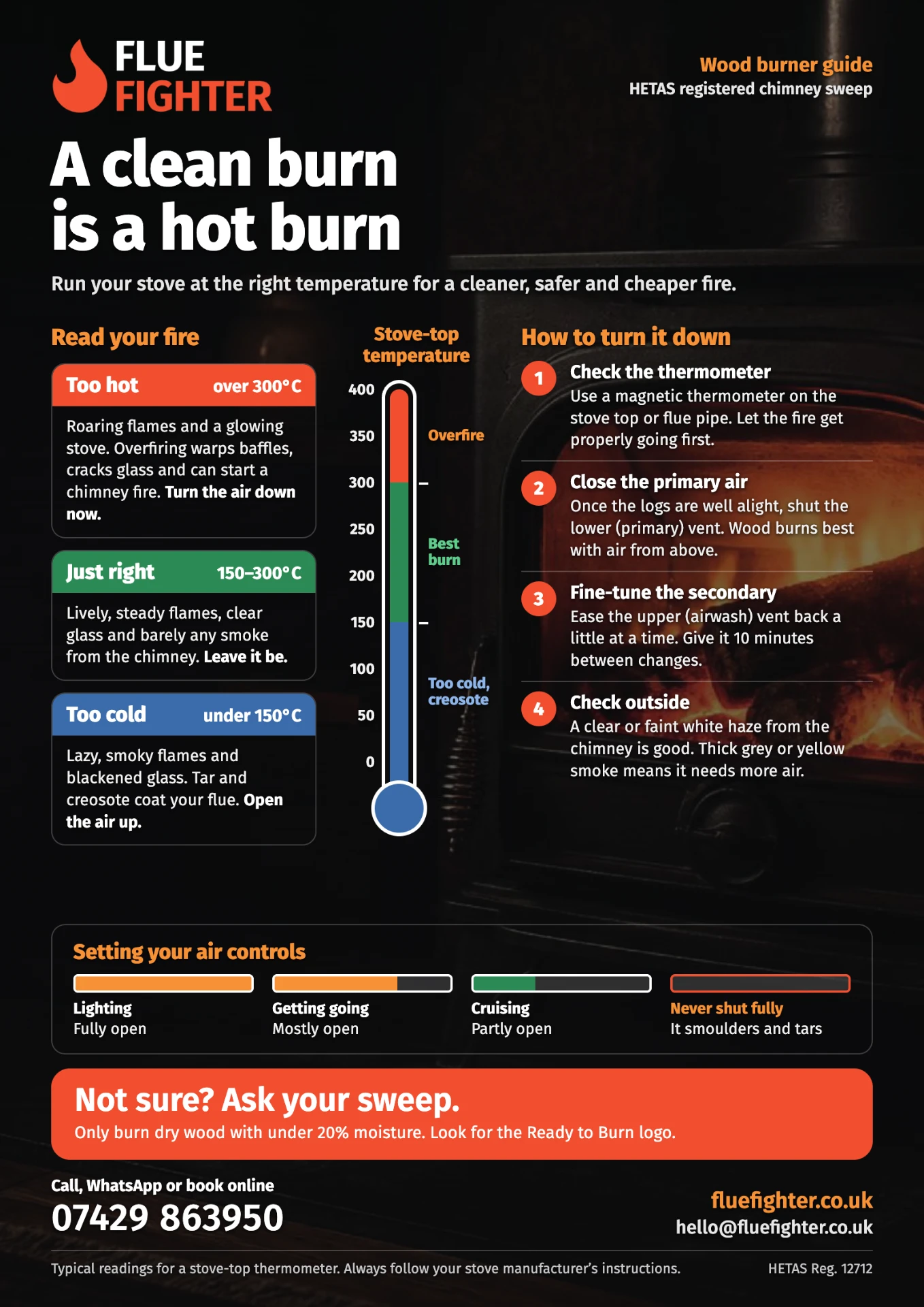
Read your fire
Too hot (over 300°C)
Roaring flames and a glowing stove. Overfiring warps baffles, cracks glass and can start a chimney fire. Turn the air down now.
Just right (150–300°C)
Lively, steady flames, clear glass and barely any smoke from the chimney. Leave it be.
Too cold (under 150°C)
Lazy, smoky flames and blackened glass. Tar and creosote coat your flue. Open the air up.
How to turn it down
- 1
Check the thermometer
Use a magnetic thermometer on the stove top or flue pipe. Let the fire get properly going first.
- 2
Close the primary air
Once the logs are well alight, shut the lower (primary) vent. Wood burns best with air from above.
- 3
Fine-tune the secondary
Ease the upper (airwash) vent back a little at a time. Give it 10 minutes between changes.
- 4
Check outside
A clear or faint white haze from the chimney is good. Thick grey or yellow smoke means it needs more air.
Setting your air controls
- Lighting: fully open
- Getting going: mostly open
- Cruising: partly open
- Never shut fully: it smoulders and tars
Dry wood matters
Only burn wood with under 20% moisture — look for the Ready to Burn logo. See our best wood for log burners guide and how often to sweep.
Common questions
What temperature should my wood burner run at?
On a stove-top thermometer, roughly 150–300°C is the best burn zone for most stoves. Always follow your manufacturer's instructions.
What happens if my stove runs too cold?
Below about 150°C the fire smoulders, the glass blackens and tar and creosote build up in the flue, raising the risk of a chimney fire.
What happens if my stove runs too hot?
Above about 300°C you risk overfiring, which can warp baffles, crack glass and start a chimney fire. Turn the air down.
Should I ever shut the air controls fully?
No. Shutting the air fully makes the fire smoulder and tar the flue. Leave the secondary (airwash) partly open while cruising.
Typical readings for a stove-top thermometer. Always follow your stove manufacturer's instructions.